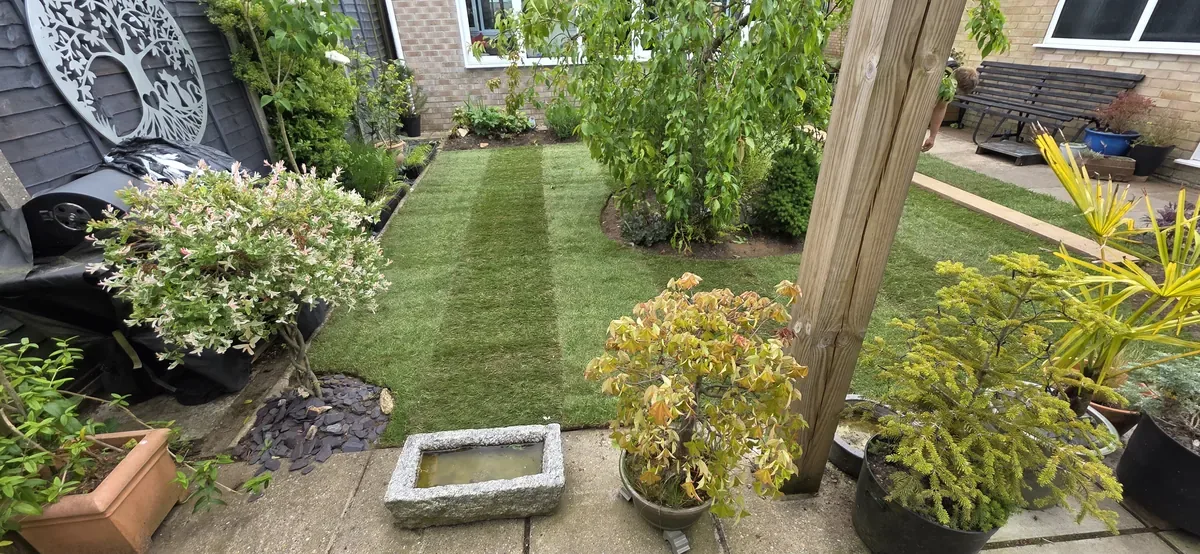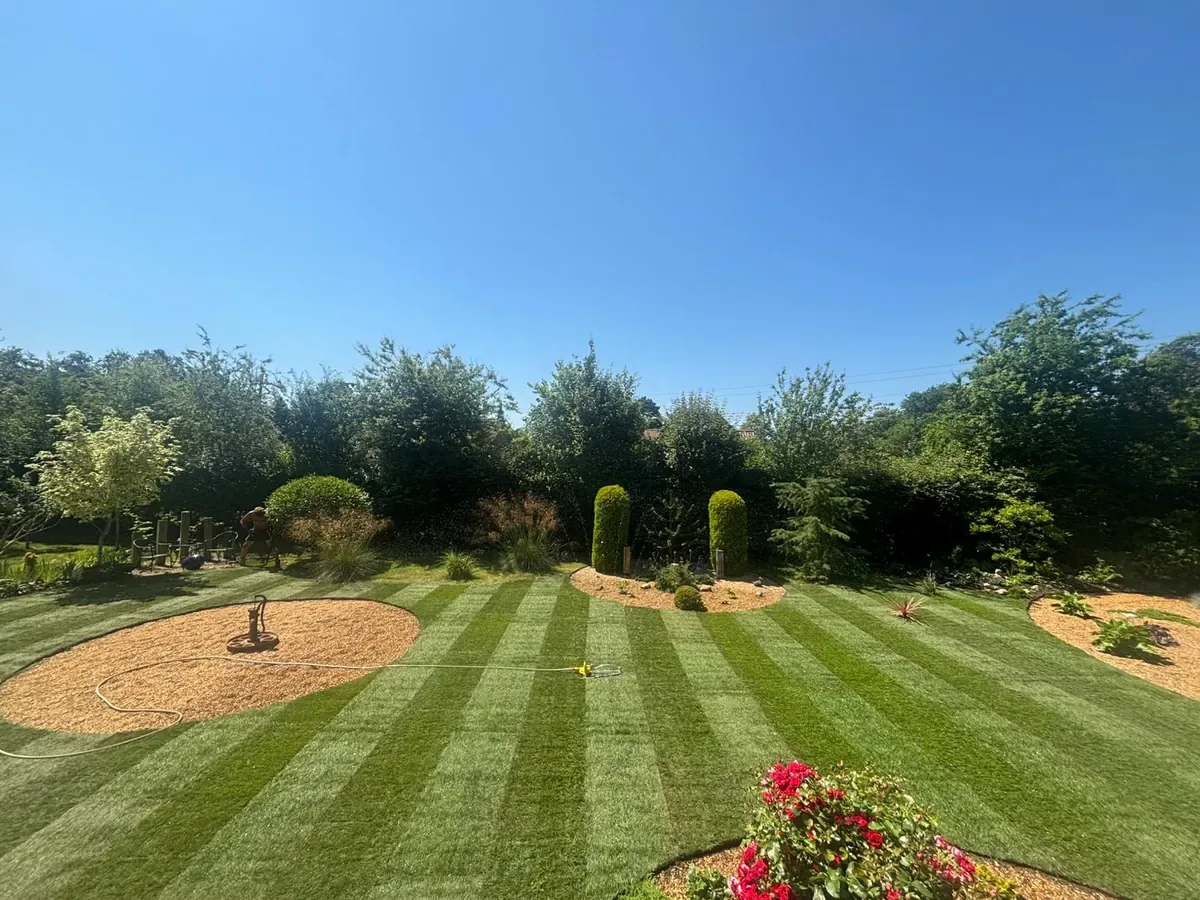
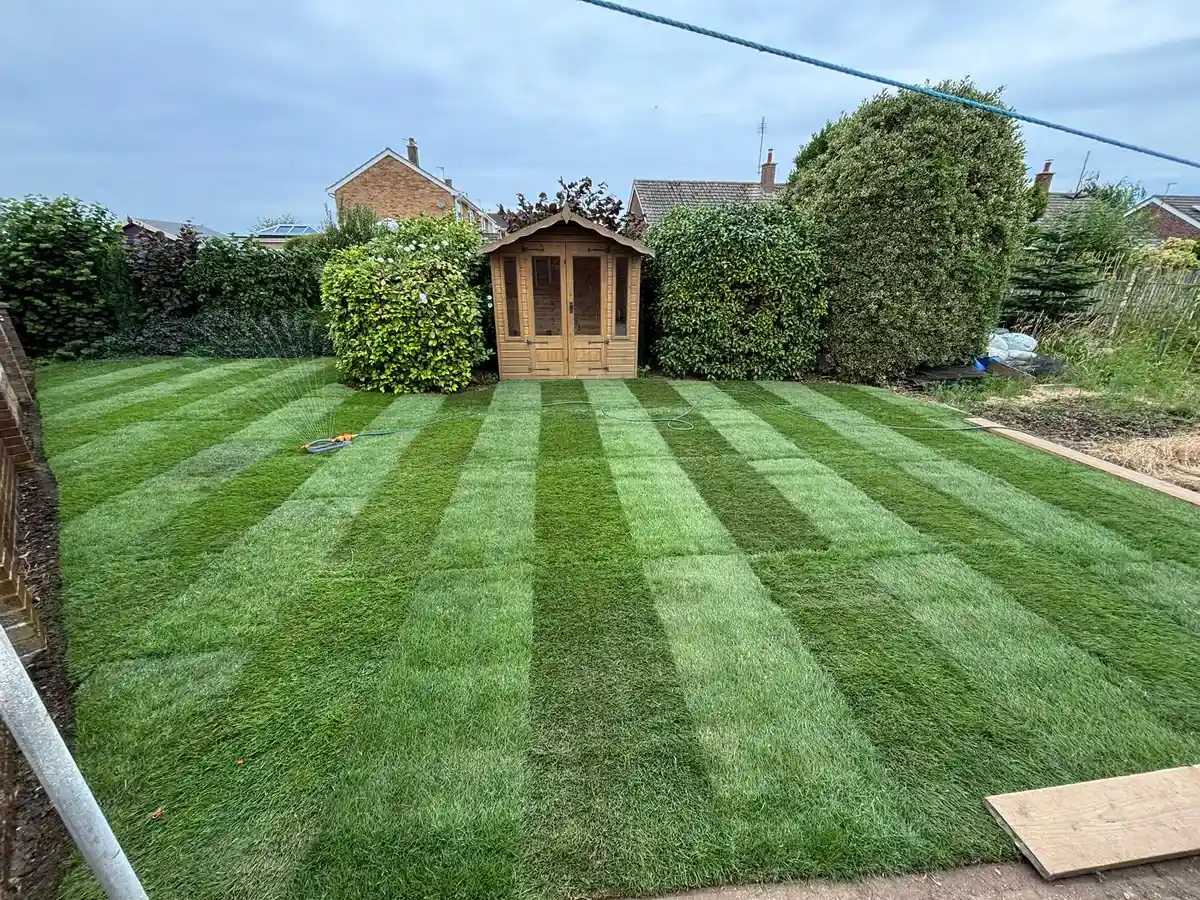
You’ve had fresh turf laid and the garden looks great. But underneath, the real work is just beginning. New turf needs time to knit into the soil below, and how long that takes depends on a few practical factors: the time of year, how well the ground was prepared, and how you look after it in the weeks that follow.
Key Takeaways
-
New turf typically takes 2 to 6 weeks to root, depending on season, soil condition, and aftercare.
-
Spring and autumn give the best rooting conditions in Norfolk due to mild temperatures and reliable moisture.
-
Proper ground preparation before laying is the single biggest factor in how quickly turf establishes.
-
You can check rooting progress by gently lifting a corner of a turf roll to see if roots have penetrated the soil.
-
Walking on new turf too soon is one of the most common reasons it fails to establish properly.
How Long Does Turf Take to Root?
Most new turf laid in Norfolk will begin rooting within two weeks and be reasonably established after four to six weeks. That said, “established” does not mean fully rooted. Deep, strong root development takes closer to three months, and you should treat the lawn as new throughout that whole period.
The speed of rooting is closely tied to soil temperature. When the ground is warm (roughly between 8°C and 20°C), root growth is active and turf knits down quickly. In colder months, that process slows considerably. This is why turf laid in mid-summer or mid-winter often takes longer to settle than turf laid in spring or early autumn, which tend to offer the most reliable conditions for establishment in this part of Norfolk.
What Affects How Quickly Turf Roots?
Several factors influence the rooting timeline, and most of them come back to what happens before the turf is even rolled out.
Ground Preparation
This is the most important factor of all. Turf laid onto compacted, poorly drained, or uneven ground will struggle to root no matter how good the turf itself is. The soil needs to be broken up, levelled, and firmed to give the turf rolls something to grip into. Our guide on how to prepare the ground for a new lawn in Norfolk goes through this in detail, but the short version is: correct preparation is not optional, it is the foundation everything else depends on.
Soil Type
Sandy soils, which are common in parts of Norfolk, drain quickly and warm up fast. That can encourage early root growth, but it also means turf dries out more easily in the first few weeks. Clay-heavy soils hold moisture better but can become waterlogged if drainage has not been addressed. Either way, improving the soil before laying gives turf a much better start.
Time of Year
-
Spring (March to May): good soil temperatures, rising moisture. One of the best windows for laying turf in Norwich.
-
Summer (June to August): warm but often dry. Turf can root well if watered consistently, but it needs more attention.
-
Autumn (September to November): excellent conditions. Cooler temperatures reduce stress and rainfall does much of the watering work.
-
Winter (December to February): possible but slow. Frost can damage newly laid turf before it roots, and waterlogging is a risk.
Watering
In the first two weeks, new turf needs watering every day, ideally in the early morning. The goal is to keep the soil beneath moist without letting it become waterlogged. Once the turf starts to root, you can water less frequently but more deeply, which encourages roots to grow downward rather than staying close to the surface.
How Do You Know If Turf Has Rooted?
The simplest check is to lift a corner of one of the turf rolls gently. In the first few days, it will lift cleanly with no resistance. As roots begin to develop, you will feel increasing resistance. When you cannot lift the corner without tearing the turf, it has rooted properly into the soil below.
You can also watch for colour changes. Turf that is struggling to root will often look pale or slightly yellow at the edges. Healthy, rooting turf stays a consistent green across the whole roll. If you notice pale patches or edges lifting away from the ground, check your watering and look for any areas where the soil may not have been firmed down adequately before laying.
What Should You Avoid in the First Six Weeks?
Keeping off the lawn as much as possible in the first two to three weeks gives turf the best chance. Foot traffic compresses the soil and disrupts the fine root hairs that are trying to penetrate downward. If you need to cross the lawn, use a plank to spread your weight.
You should also hold off mowing until the turf has rooted. The first cut should be light (no more than a third of the blade height removed) and done when the grass has reached around 5 to 6 centimetres. Mowing too soon or too short puts unnecessary stress on turf that is still finding its feet. Avoid fertilising in the first month unless a slow-release pre-turf fertiliser was incorporated into the soil during preparation.
Does Lawn Levelling Affect Rooting?
Yes, it can. If the ground beneath is uneven, some areas of turf will have good soil contact while others sit slightly raised, with an air gap below. Those raised sections dry out faster and root more slowly. This is one reason lawn levelling matters as much as it does. Getting the surface flat and firm before laying means every section of turf has the same chance to establish evenly.
If you have an existing lawn that is patchy, uneven, or struggling, it is worth reading about whether your Norfolk lawn might need a fresh start before deciding whether to repair or replace.
Turf Versus Seeding: Which Roots Faster?
Turf gives you an instant result and roots within weeks. Seeding takes longer to establish (typically eight to twelve weeks before you can use the lawn), but it can be a better fit for certain projects, particularly where budget or timing makes turf impractical. You can find out more about that option on our lawn seeding page, which explains when seeding makes more sense than turf and what to expect from the process.
For most residential gardens in and around Norwich where people want a usable lawn as quickly as possible, new lawn installation using turf remains the more practical choice.
Frequently Asked Questions
Can you lay turf in winter in Norwich?
You can lay turf in winter, but it is not ideal. Cold soil slows rooting significantly, and frost can damage newly laid turf before it has a chance to establish. Waterlogging is also more of a risk on Norfolk soils in the colder months. If you can wait until March, the results will generally be more reliable.
How often should I water new turf in the first two weeks?
Water every day for the first two weeks, ideally in the morning. The soil beneath the turf should stay consistently moist but not waterlogged. In dry or warm spells, you may need to water twice a day. Once you can feel resistance when you try to lift a corner, you can reduce watering frequency.
Why is my new turf going yellow at the edges?
Yellow edges usually mean the turf is drying out at the joins. This often happens when the edges are not pressed firmly into the soil or when watering does not reach the seams between rolls. Make sure joins are tight when laying, press edges down firmly, and pay attention to watering the perimeter as well as the centre.
When can I mow new turf for the first time?
Wait until the turf has rooted and reached around 5 to 6 centimetres in height. Your first cut should be light, removing no more than a third of the blade length. Use a sharp mower and avoid cutting when the ground is soft or wet. Cutting too soon is one of the most common mistakes people make with new lawns.
Does the type of turf affect how quickly it roots?
Yes. Cultivated turf grown specifically for laying (rather than meadow or low-grade turf) tends to root more reliably because it is produced with a consistent root mat and clean soil. The quality of the turf itself matters, but it works alongside good ground preparation, not instead of it.