If you’ve booked a lawn installation in Norwich and you’re not sure what to expect on the day, this post walks you through it. Knowing what’s involved helps you prepare your garden, plan your day, and understand why each stage matters. The process is straightforward, but there’s more to it than just rolling out turf.
What Does a Lawn Installation Day Actually Involve?
A lawn installation day covers several distinct stages: clearing the existing surface, preparing the soil, laying the turf in a tight brick-bond pattern, rolling it for good contact, and watering it in. Each stage builds on the last, and skipping or rushing any of them is where problems start.
Clearing and Stripping the Existing Surface
The day usually begins with clearing whatever is already there. If there’s old grass, weeds, or debris on the surface, that comes up first. This might mean stripping back old turf, raking out moss, or removing any material that would prevent the new turf from rooting properly. The aim is a clean, workable base. How long this takes depends on the size of the area and the state it’s in, but it’s never skipped.
Soil Preparation
Once the surface is clear, the soil gets attention. This is where the real groundwork happens. The soil is broken up, levelled, and graded so water drains away from buildings and the surface sits flat. Any low spots are filled, and any high spots are taken down. If the soil is compacted or poor quality, this is the point where it gets improved. This stage is explained in more detail in the post on how to prepare the ground for a new lawn in Norfolk, which is worth reading if you’re curious about what goes into it.
How Is the Turf Actually Laid?
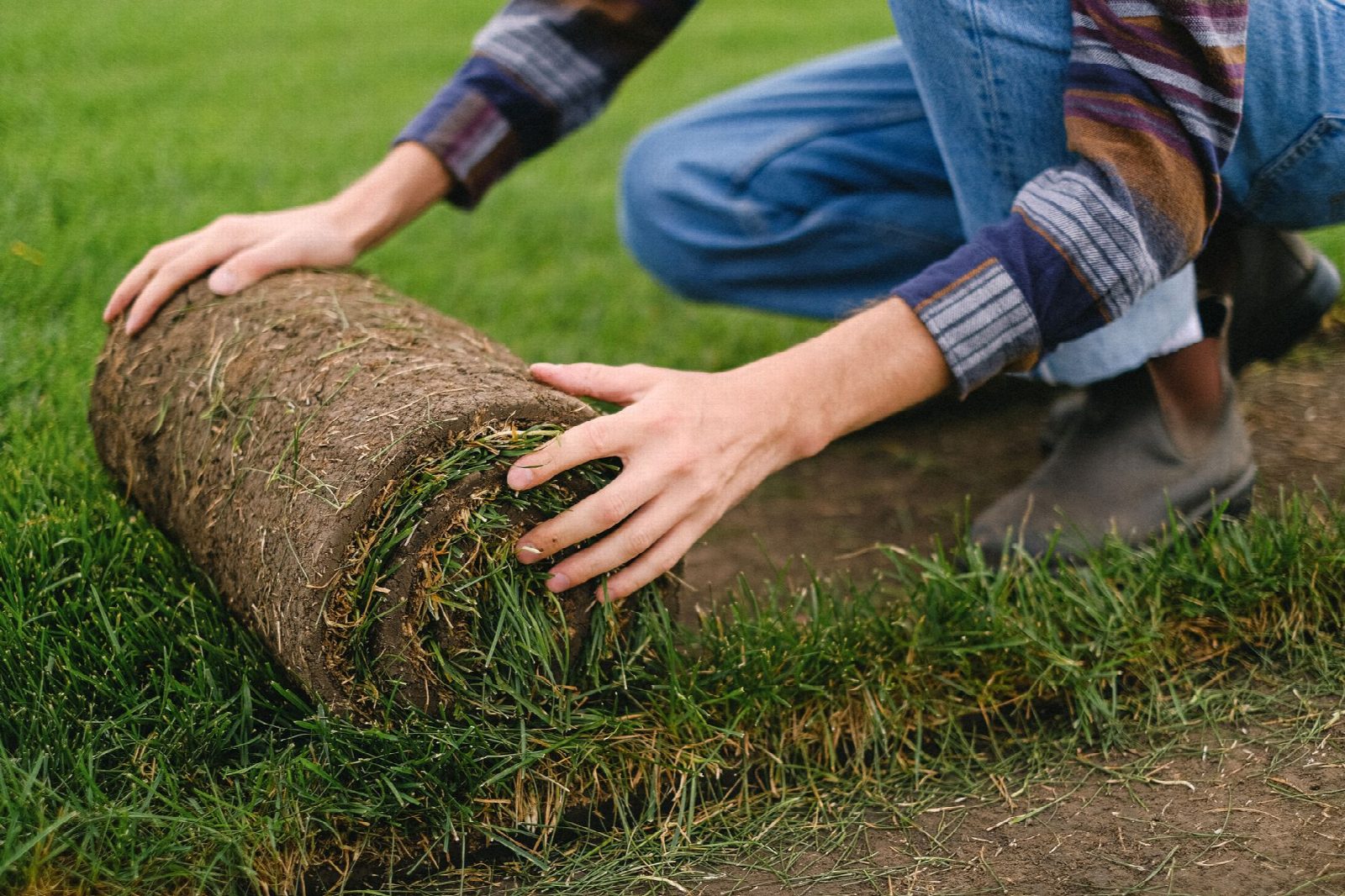
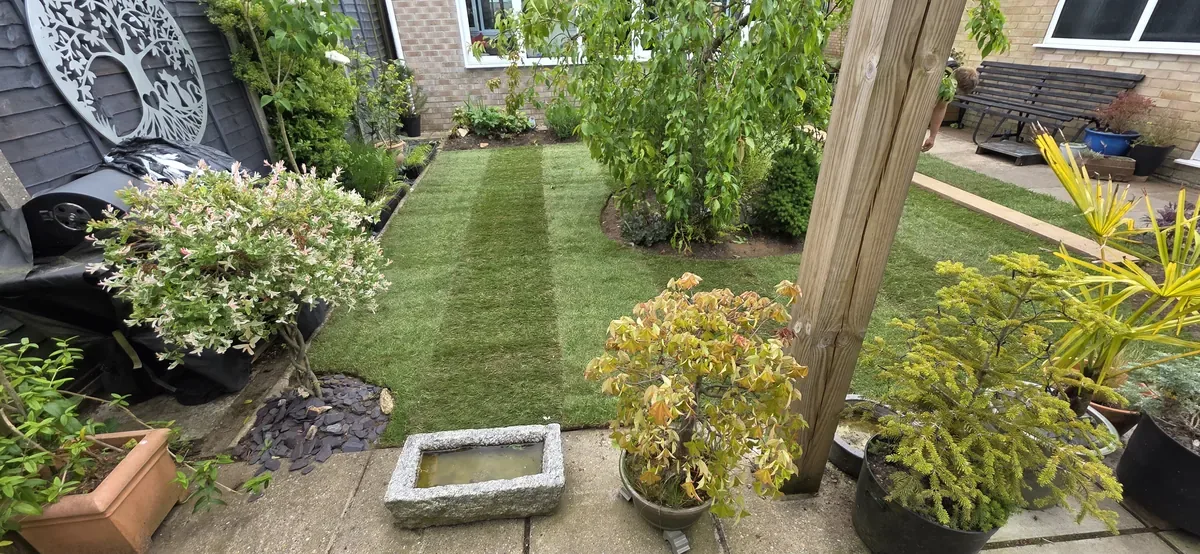
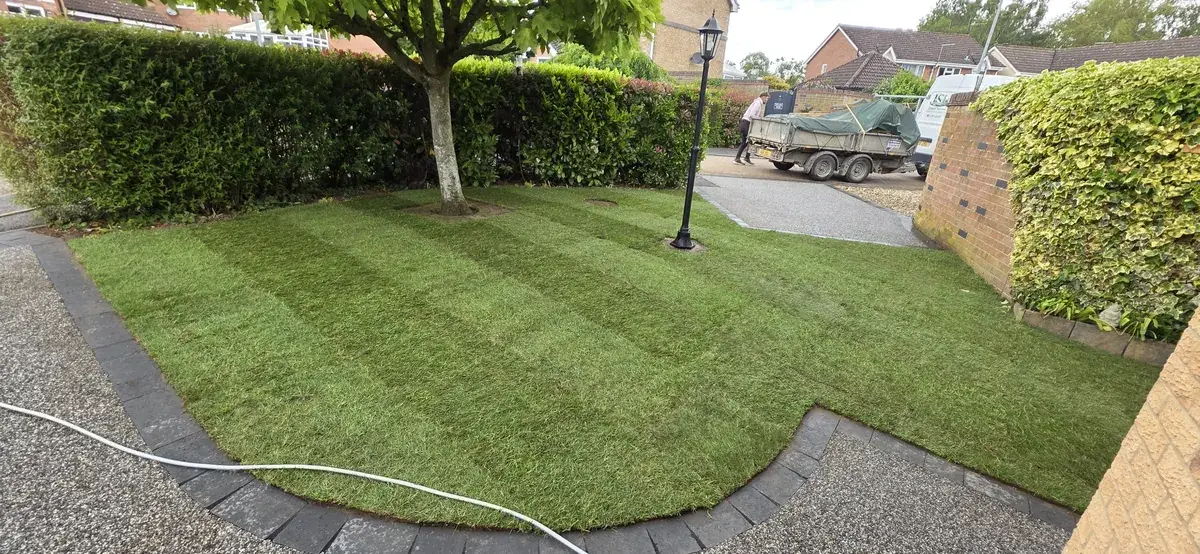
Turf is laid in a staggered, brick-bond pattern, starting from a straight edge and working across the area. Each row is offset from the last so the joints don’t line up. This isn’t just for appearance; it gives the lawn structural integrity and prevents gaps forming as the turf settles. Rolls are butted tight together with no overlaps and no gaps. Edges are cut clean with a half-moon edger or sharp spade once the main area is covered.
Rolling and Firming
Once the turf is down, it’s rolled. A lawn roller presses the turf firmly against the soil beneath, which is what encourages the roots to establish quickly. Good soil contact is the single biggest factor in how well a new lawn takes. If there are air pockets between the turf and the soil, the grass suffers. Rolling removes those pockets and gives the lawn its best start.
Watering In
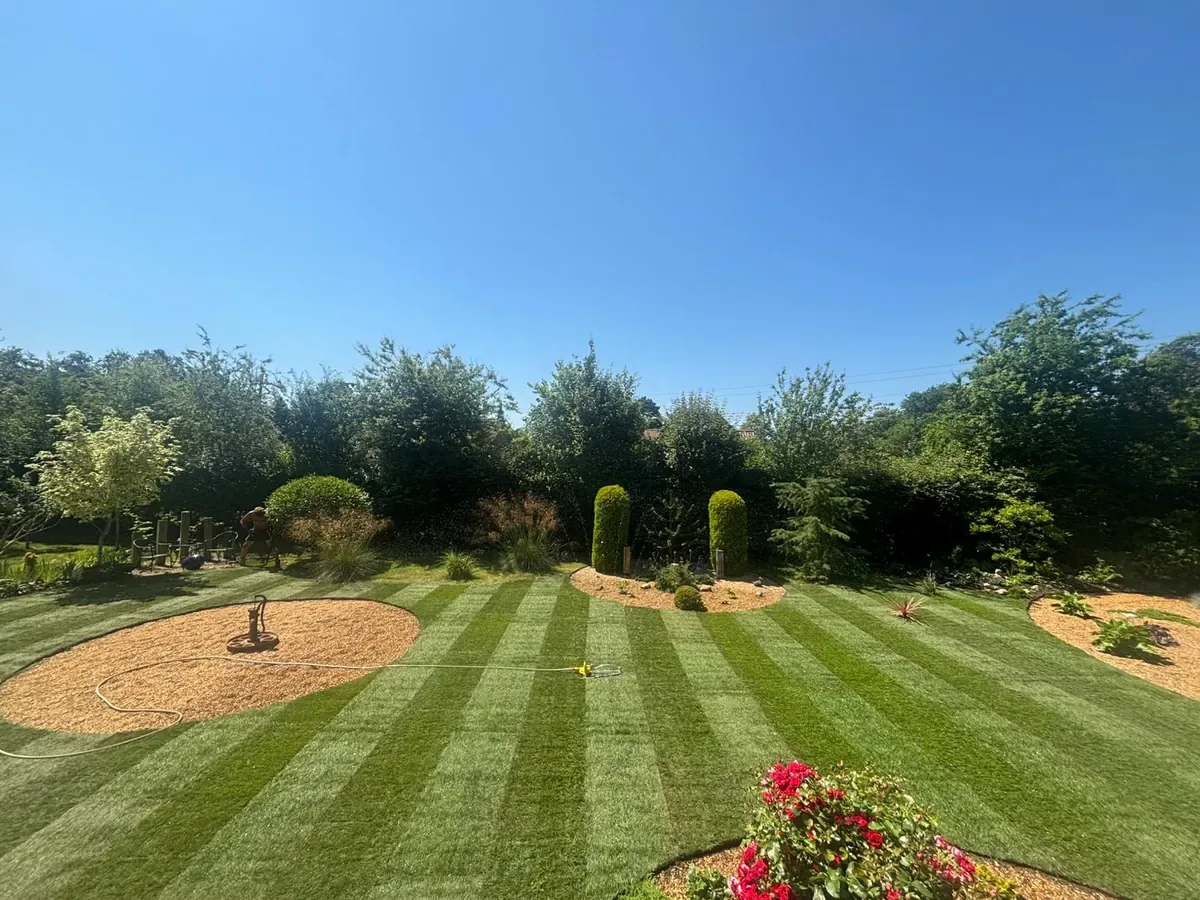
The final step on installation day is a thorough watering. New turf needs to be wet through, not just surface-damp, so the moisture reaches the soil below. You’ll be told exactly how to water it in the days that follow, how often, and for how long. The aftercare period is critical, particularly in warmer or drier conditions. If you’re unsure whether your lawn needs a full replacement or something less involved, the post on patchy, weedy, or mossy lawns covers that question directly.
What Should You Do Before the Installers Arrive?
Clear access to the garden makes the job run more smoothly. Move any garden furniture, pots, or equipment out of the work area. If there’s a gate, make sure it can be opened wide enough for a wheelbarrow. You don’t need to do anything to the ground itself; that’s what the preparation stage is for. If you’re in any doubt about what the area needs, the FAQ page covers common questions, or you can get in touch directly.
What About Seeding Instead of Turf?
Turf gives you an instant result, but it’s not always the right option for every situation. Lawn seeding is a lower-cost alternative that works well for larger areas or where budget is a priority. It takes longer to establish and needs more careful aftercare in the early weeks, but the end result is a lawn that’s grown from seed in your specific soil conditions. The right choice depends on your timescale, budget, and the condition of the ground.
Frequently Asked Questions
How long does a lawn installation take in Norwich?
Most residential lawn installations take one day, including preparation and laying. Larger or more complex areas may run into a second day. The size and current state of the ground are the main factors. You’ll get a clear idea of the timescale before the job is booked.
Can you walk on the lawn straight after it’s been laid?
It’s best to stay off new turf for at least two to three weeks while the roots establish. Light watering access is fine, but avoid any heavy foot traffic until the turf has knitted into the soil. Walking on it too early can disrupt the root contact that the rolling process worked to create.
What time of year is best for lawn installation in Norwich?
Turf can be laid at almost any time of year, but spring and autumn tend to give the best results. The cooler temperatures and more reliable rainfall make it easier for new turf to establish without stress. Summer installations are possible but need more careful watering management.
What if my garden is uneven before the installation?
Levelling is part of the preparation process. If your garden has significant slopes, dips, or humps, those are addressed before the turf goes down. For more severe cases, lawn levelling as a standalone service may be worth considering first. The preparation stage is what determines how flat and even the finished lawn looks.
Do you cover my area of Norwich?
James Steven Landscapes & Lawns covers Norwich and the surrounding Norfolk area. The areas we cover page has the full details. If you’re not sure whether your postcode is included, just get in touch and we’ll confirm.